
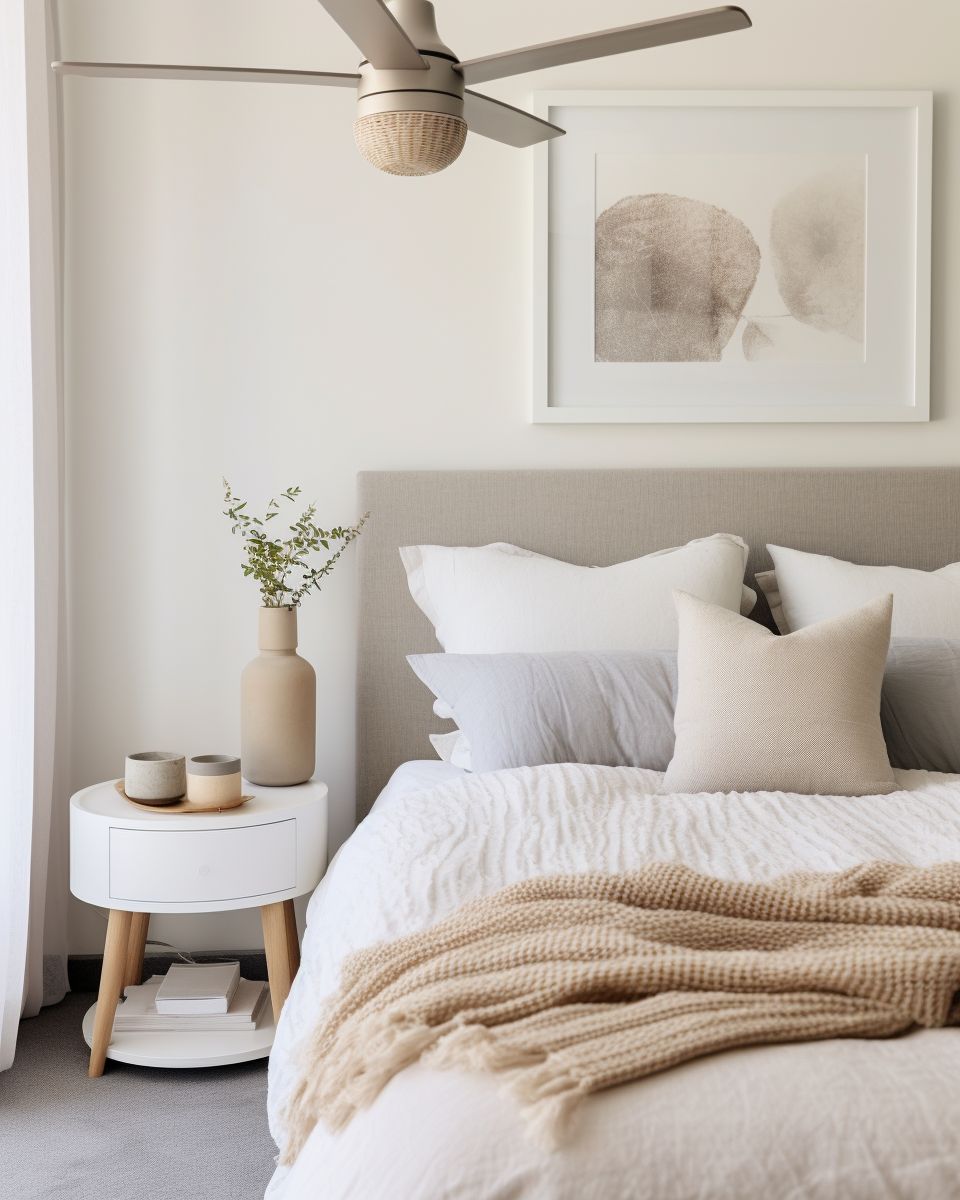
Do you turn on a fan before bed? While some people swear by the cool breeze and soothing hum to help them fall asleep, it’s important to weigh the pros and cons of this nightly ritual.
Fans might not pose serious health risks during the night, but for some of us, they could lead to mildly annoying symptoms. Buckle up as we explore the intricate web of benefits and potential drawbacks of sleeping with a fan on. Whether you’re a die-hard fan user or simply a curious insomniac, there’s plenty to learn about how that nightly breeze affects your body and health.
The Benefits of Sleeping with a Fan
White Noise for Better Sleep: Fans generate a steady, comforting sound that can drown out disruptive noises. This white noise can help you fall asleep faster and enjoy deeper, more restorative slumber.
Temperature Regulation: Fans help keep your room cooler by circulating air, making those hot summer nights more bearable. Consistent airflow can prevent overheating, ensuring a more comfortable night’s sleep without the tossing and turning.
Improved Air Circulation: By promoting better air circulation, fans reduce the risk of stuffiness and allergen buildup in your bedroom. This is especially important for allergy sufferers or those with asthma.
Reduced SIDS Risk: Some studies suggest that using a fan in your baby’s room may help reduce the risk of sudden infant death syndrome (SIDS). It’s believed that improved air circulation and lower carbon dioxide levels play a role in this potential benefit, although more research is needed.
The Potential Drawbacks
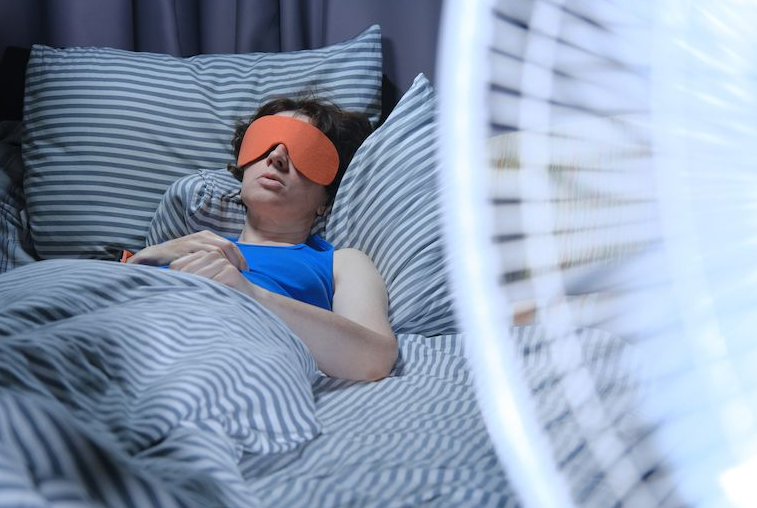
**Dry Skin and Eyes:** Fans can dry out the air in your room, potentially leading to dry skin and irritated eyes. To counteract this, consider using a humidifier alongside your fan, especially in the colder months.
**Muscle Stiffness:** That consistent breeze your fan provides can sometimes lead to muscle stiffness and discomfort, particularly if it’s blowing directly on you. It’s a good idea to position your fan so it’s not aimed straight at your body.
**Increased Allergen Exposure:** While fans can help reduce allergen buildup, they can also stir up dust if not cleaned regularly. Make sure to clean your fan blades and surrounding areas to minimize dust and allergens in your room.
**Noise Sensitivity:** Although many find the white noise generated by fans soothing, some might become more sensitive to noise over time. If you notice this happening, you might want to reconsider using a fan or choose a quieter model.
**Environmental Impact:** Running a fan all night long does consume electricity, contributing to your carbon footprint. Opt for energy-efficient fans and remember to switch them off when you don’t need them to lessen the environmental impact.
In conclusion, sleeping with a fan on can certainly offer several benefits, such as better sleep through white noise, temperature regulation, and improved air circulation. However, it’s essential to be mindful of the drawbacks like dry skin and eyes, potential muscle stiffness, and increased allergen exposure. By taking a balanced approach and making a few adjustments, you can enjoy the cool, soothing breeze of your fan without compromising your comfort or health. Sweet dreams and happy fanning!