I’ve faced enemy fire. I’ve slept in dirt while mortars shook the ground. I’ve missed birthdays, anniversaries, and first steps. But nothing – absolutely nothing – prepared me for the war I walked into at Oak Creek Elementary this morning.
I had been back on American soil for exactly 48 hours.
My daughter, Lily, is six. She’s tiny for her age, with eyes that look too big for her face and a spirit that’s been a little crushed since I deployed 18 months ago.
This morning was supposed to be a surprise. I drove her to school, but I didn’t walk her to the class. I wanted to surprise her at lunch. I wanted to be the dad who shows up.
But around 10:00 AM, a feeling hit me. A gut instinct. The kind that wakes you up in a trench. I couldn’t explain it, but I needed to see her. Now.
I drove back to the school, still in my fatigues. The receptionist smiled when she saw the uniform, buzzing me in without a second thought. “Thank you for your service,” she said.
If she knew what was happening down the hall, she wouldn’t have been smiling.
As I approached Room 1B, I heard it.
It wasn’t teaching. It was screaming.
“YOU DO NOT MOVE! YOU STAND THERE UNTIL I SAY YOU ARE FIT TO LEARN!”
The voice was shrill, angry, and terrifying.
My boots were heavy on the linoleum, but I moved quietly. I looked through the slim window of the classroom door.
And my heart stopped.
There was my Lily. My baby girl.
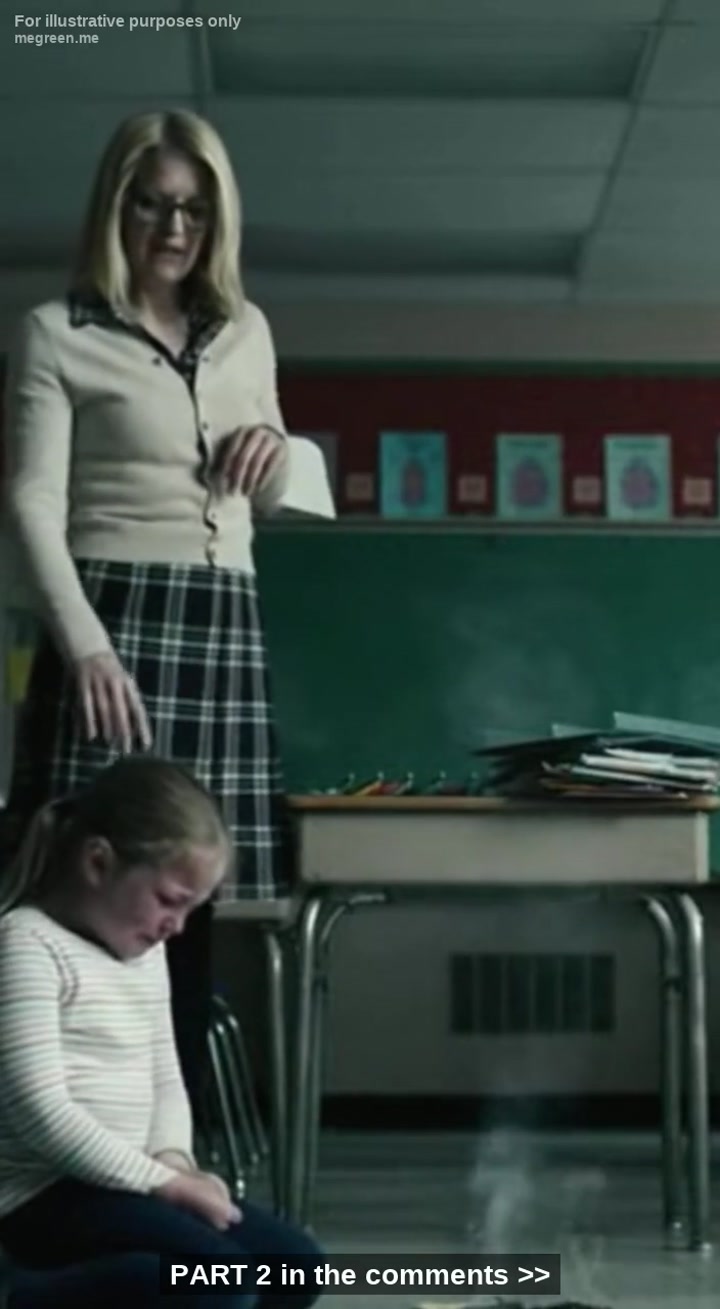
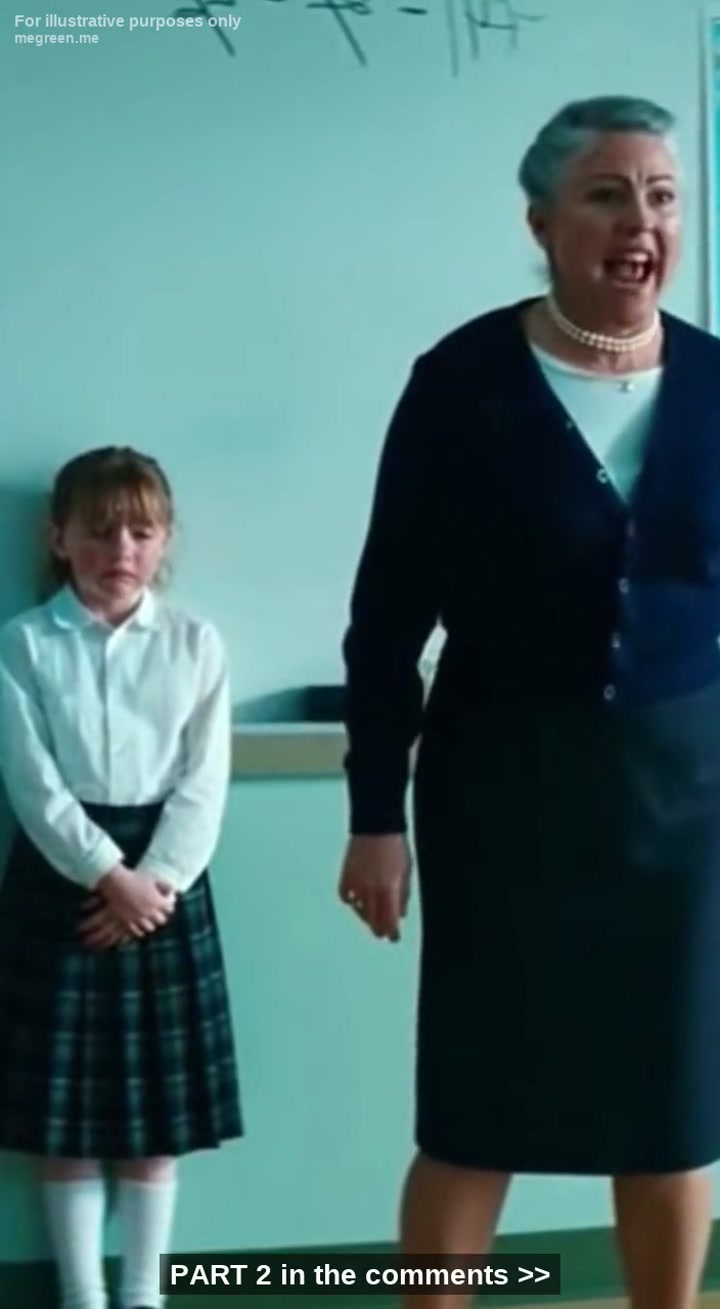
She wasn’t at her desk. She was pressed against the back wall, under the clock. Her face was gray. Sweat was matting her bangs to her forehead. Her little legs were shaking so violently I could see her knees knocking together.
The rest of the class sat in terrified silence.
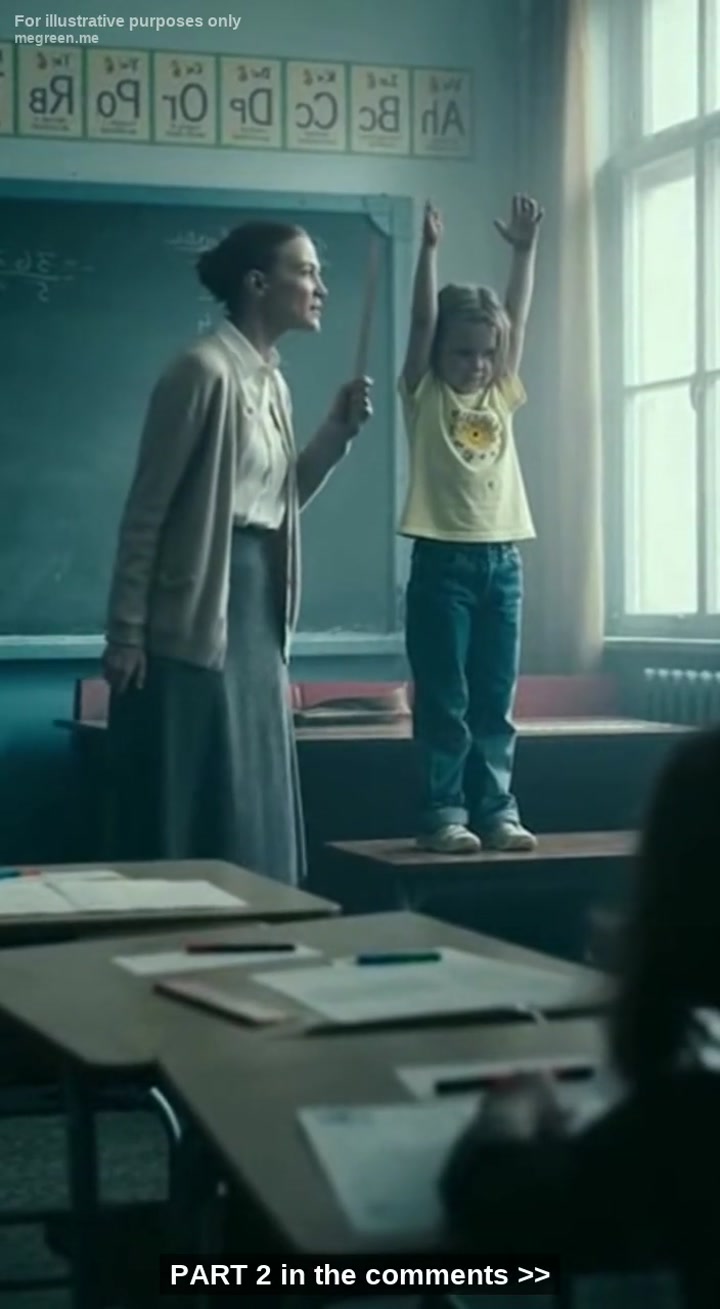
The teacher, Mrs. Halloway, a woman who looked like she hated every breath she took, was towering over my daughter.
“I said stand up straight!” she shrieked, slamming a ruler against the whiteboard. “You lack discipline! You lack focus! If you can’t sit still, you will stand until you learn how to be a student! Do you hear me?”
Lily didn’t answer. She couldn’t.
I saw her eyes roll back.
I didn’t think. I didn’t open the door; I shoved it so hard it slammed against the stopper with a crack like a gunshot.
“LILY!”
At that exact second, her legs gave out.
It was like watching a building collapse in slow motion. She just folded.
I dove. I slid across the polished floor, ignoring the pain in my knees, and my arms – trained to carry rucksacks and rifles – snatched her fragile body inches before her head cracked against the hard tile.
She was limp. Burning up.
I pulled her into my chest, the rough fabric of my uniform against her cheek.
The room went silent.
I looked up.
Mrs. Halloway was frozen. Her mouth was open, ready to scream another command, but the words died in her throat. She looked at me – at the combat boots, the camouflage, the name tape that said “HARRISON,” and the look in my eyes that promised absolute hell.
“She… she was refusing to focus,” the teacher stammered, her voice trembling now. “She wouldn’t sit still.”
I stood up, holding my unconscious daughter in my arms like a porcelain doll. I stepped toward the teacher.
“She is six years old,” I whispered, and the quietness of my voice was scarier than her screaming ever was. “And if she doesn’t wake up in the next minute, God help you.”
My gaze didn’t leave Mrs. Halloway’s face. Her eyes darted around, searching for an escape, but there was none. She swallowed hard, her Adam’s apple bobbing.
The silence in the room was absolute, broken only by my own ragged breathing and Lily’s shallow gasps. A few of the children were openly weeping, their small faces pale with fright. This woman had terrorized an entire classroom.
“Someone get the nurse,” I ordered, my voice still a low growl, but carrying enough authority to break the spell. A brave little boy, probably around eight, scrambled out of his seat and dashed for the door.
Mrs. Halloway took a shaky step back. “I… I was just trying to teach discipline,” she mumbled, her voice barely audible.
I took another step closer, my uniform rustling. “You don’t teach discipline by breaking a child, ma’am.” My eyes burned into hers. “You teach fear.”
Just then, the classroom door burst open again. A woman with kind eyes and a grey uniform, the school nurse, rushed in, followed by a stern-faced woman in a sensible suit – the principal, Ms. Albright.
“What in the world is going on here?” Ms. Albright demanded, her eyes sweeping over the scene. Her gaze landed on me, then Lily, then Mrs. Halloway’s terrified face.
“This is my daughter, Lily Harrison,” I stated, my voice losing its whispery menace, becoming steel. “She just collapsed after Mrs. Halloway forced her to stand against that wall for two hours.”
The nurse gasped, immediately moving towards me. “Let me see her, Mr. Harrison.” She gently took Lily from my arms, laying her on the small rug near the reading corner.
Lily’s skin was alarmingly hot to the touch. The nurse quickly took her pulse and checked her temperature. “She’s burning up,” she announced, her voice urgent. “We need to get her to the clinic, and then probably the hospital.”
Ms. Albright’s face went from stern to horrified. She glared at Mrs. Halloway, who stood frozen, unable to speak. “Mrs. Halloway, my office. Now.” Her voice was low and dangerous.
I watched as the nurse carefully carried Lily out of the room. I followed, but not before delivering one last, piercing look to Mrs. Halloway. “This isn’t over,” I promised.
In the school clinic, the nurse worked quickly, applying cool compresses to Lily’s forehead. Lily’s breathing remained shallow, and she stirred only slightly, letting out a small whimper.
I pulled out my phone, my hands shaking. I called my ex-wife, Sarah, Lily’s mother. Her voice, usually calm, was laced with panic when I explained what had happened.
“I’m on my way, Harrison,” she said, her voice tight with suppressed fear. “Don’t you dare let her out of your sight.” I assured her I wouldn’t.
An ambulance arrived within minutes, sirens muted but lights flashing. Paramedics efficiently assessed Lily and gently placed her on a stretcher. My heart ached seeing her so still and vulnerable.
I rode with her in the ambulance, my hand gently holding her small, clammy one. Sarah met us at the emergency room doors, her face pale, eyes wide with terror.
Hours stretched into an eternity in the sterile hospital waiting room. Doctors ran tests, checked vitals, and kept Lily on an IV drip for dehydration. Finally, a kind-faced pediatrician, Dr. Ramirez, came out to speak with us.
“Lily is stable,” she began, offering a small, reassuring smile. “She suffered from severe dehydration and exhaustion. Her body temperature was quite high when she arrived.”
Sarah broke down, tears streaming silently. I put an arm around her, my own jaw tight. “How could this happen?” I asked, my voice raw.
Dr. Ramirez looked at us gravely. “Forcing a child, especially a young one, to stand for two hours without water or a break is incredibly dangerous. Her body simply gave out.”
She explained the risks of heatstroke and kidney damage from severe dehydration. My blood ran cold, imagining the worst-case scenarios we had narrowly avoided. Lily was lucky.
Later that evening, Lily finally woke up, her eyes fluttering open slowly. She looked around, confused, then her gaze landed on me and Sarah. A small, weak smile touched her lips.
“Daddy?” she whispered, her voice hoarse. “Mommy?”
We both rushed to her side, gently taking her hands. “We’re here, sweetie,” Sarah choked out, tears still flowing. “We’re right here.”
Lily whimpered. “My legs hurt.” She looked at me, her eyes clouded with a memory. “Mrs. Halloway said I couldn’t focus. She made me stand.”
My heart clenched. Hearing it from her own lips, the innocent, simple truth of it, was a physical blow. The rage I had suppressed all day boiled to the surface again.
After ensuring Lily was comfortable and stable, I stepped out of her room with Sarah. “This isn’t just about Mrs. Halloway,” I said, my voice low and determined. “This is about every child she’s ever hurt. And the school that let her do it.”
Sarah nodded, her eyes fierce. “She needs to be stopped, Harrison. And the school needs to answer for this.”
The next morning, after Lily had gotten some much-needed sleep, I left Sarah with her and returned to Oak Creek Elementary. I was no longer in uniform; I wore civilian clothes, but the military discipline still resonated in my posture.
Ms. Albright met me in her office, her face drawn. Mrs. Halloway was not present, which I noted immediately. “Mr. Harrison, I assure you, we are taking this very seriously.”
“Seriously isn’t enough, Ms. Albright,” I countered, my voice calm but firm. “My daughter nearly died because of Mrs. Halloway’s actions.”
Ms. Albright sighed, wringing her hands. “Mrs. Halloway has been placed on administrative leave, pending an investigation. We have contacted the school board.”
“And what about the previous complaints?” I asked, leaning forward. “Do you mean to tell me Lily is the first child Mrs. Halloway has terrorized?”
Ms. Albright’s eyes flickered, a tell-tale sign of evasion. “We… we address all concerns as they arise, Mr. Harrison.” It was a politician’s answer.
I knew she was hiding something. “I want to speak to other parents in Room 1B. I want a copy of Mrs. Halloway’s personnel file. I want to know her entire employment history.”
She looked uncomfortable. “I can’t just give you personnel files, Mr. Harrison. That’s confidential.”
“Then I’ll go to the school board. I’ll go to the district superintendent. I’ll go to the media,” I threatened, my voice rising slightly. “I will make sure everyone knows what happened to Lily, and how this school protected the person who did it.”
That seemed to get her attention. Ms. Albright finally relented, promising to arrange a meeting with a school board representative and to provide me with the necessary contacts to file a formal complaint.
My next step was to talk to other parents. I started with the brave little boy who had gone to get the nurse. His mother, a woman named Clara Davies, was initially hesitant.
“My son, Ben, he said Mrs. Halloway was mean,” Ms. Davies confessed, her voice low. “He never wanted to go to school. He’d fake stomachaches.”
She then revealed something chilling. “My older daughter, Maya, she had Mrs. Halloway two years ago. Maya started having panic attacks before school. We pulled her out mid-year.”
Ms. Davies pulled out a worn folder. Inside were meticulously kept notes: dates, incidents, and letters she’d sent to the school that had gone unanswered or dismissed. This was my first real lead, a pattern of behavior.
“They told me Maya was just ‘sensitive’,” Ms. Davies said, her voice laced with bitterness. “They said Mrs. Halloway was a ‘firm’ teacher, and some children just couldn’t handle it.”
We pooled our information. Ms. Davies had even done some digging when Maya was struggling. She found that Mrs. Halloway had moved to Oak Creek Elementary from a district across the state.
“There were rumors,” Ms. Davies whispered, leaning in. “Something about a formal complaint, similar to Lily’s situation, but the family moved, and Mrs. Halloway resigned before any official action was taken.” This was the first major twist, revealing a history of abuse that had been swept under the rug.
The school had hired Mrs. Halloway despite this red flag. It suggested either gross negligence or something more deliberate. My military training kicked in; I started building a case, meticulously gathering every piece of evidence.
Meanwhile, Lily’s recovery was slow. She was physically healing, but emotionally, she was withdrawn. She clung to me and Sarah, flinching at loud noises, and had nightmares about standing against the wall.
Sarah and I decided to get Lily a comprehensive medical and psychological evaluation. We suspected there was more to her “not focusing” than simply being disobedient.
The results came back a week later. Lily was diagnosed with mild Attention-Deficit/Hyperactivity Disorder (ADHD). This was the second twist, a crucial piece of the puzzle.
“Children with ADHD often struggle with sustained attention and can appear fidgety,” Dr. Evans, the child psychologist explained gently. “Forcing a child with ADHD to stand still for two hours is not only cruel but actively harmful. It exacerbates their internal struggle and can be traumatizing.”
My heart sank. Sarah had mentioned concerns about Lily’s focus and fidgeting to our pediatrician before, but had been told it was “normal childhood energy.” Mrs. Halloway’s punishment hadn’t just been mean; it had been an assault on a child with a specific, undiagnosed neurological difference.
This galvanized my resolve. My fight for Lily was now a fight for all children who struggled silently, whose needs were dismissed or punished.
The school board meeting was set for a Tuesday evening. The small auditorium was packed, not just with parents from Room 1B, but with other parents who had heard what happened and were now willing to share their own suppressed stories about Mrs. Halloway.
I stood at the podium, my voice steady, recounting the terrifying morning, Lily’s collapse, and her subsequent diagnosis. I presented Dr. Ramirez’s report and Dr. Evans’s evaluation.
Then Ms. Davies took the stand, her voice trembling at first, but gaining strength as she detailed Maya’s and Ben’s experiences, complete with dates and ignored complaints. Other parents followed, their voices a chorus of suppressed anger and fear.
Mrs. Halloway sat across the room, flanked by a union representative, looking pale and defiant. She offered a weak defense, blaming an overcrowded classroom, lack of resources, and “challenging students.” Her union rep argued for a lesser punishment, citing her years of service.
Then came the uncomfortable questions for Ms. Albright, the principal. I had done my homework, thanks to Ms. Davies’s initial research and some contacts I still had in the military who were adept at public records searches.
“Ms. Albright,” a board member asked, “are you aware that Mrs. Halloway resigned from her previous position in the Springfield School District just before a formal complaint of child mistreatment was escalated?”
Ms. Albright squirmed, her face turning a sickly shade of white. “I… I was aware of some difficulties in her previous placement, but she provided positive references and we were in a bind for a qualified teacher.”
It became clear. Ms. Albright had been desperate, and Mrs. Halloway, perhaps through a connection with a less-than-ethical board member who wanted to “give her a second chance,” was hired despite a checkered past. The school had prioritized expediency and perhaps favors over the safety of its students. This was the deeper systemic twist.
The board members looked shocked and embarrassed. The silence was thick with the weight of institutional failure.
The outcome was swift and unequivocal. Mrs. Halloway was not only fired but her teaching license was revoked by the state education department. She would never teach again.
Principal Albright was not so lucky either. While she wasn’t fired outright, she was placed on probation, demoted, and forced to undergo extensive retraining in child protection and administrative oversight. The district also announced a full review of its hiring practices and complaint procedures.
It was a rewarding conclusion, but the real reward came later. Lily, with therapy and a new, understanding teacher, slowly began to heal. Her new teacher, Ms. Jenkins, understood ADHD and created a supportive, flexible environment. Lily started to thrive, her bright spirit slowly returning.
I found a new purpose beyond my military service. I became an advocate, working with Ms. Davies to establish a parent-teacher advisory committee focused on student well-being and neurodiversity awareness. I spoke at parent groups, sharing Lily’s story, urging vigilance and empathy.
The war at Oak Creek Elementary had been a different kind of battle, fought not with bullets and bombs, but with determination and a fierce love for my child. It taught me that some of the most important battles are fought right at home, protecting the innocent, and holding institutions accountable. It underscored the vital lesson that every child deserves to be seen, heard, and understood, especially when their struggles are invisible.
My bond with Lily became unbreakable. We faced the aftermath together, learning that strength isn’t just about physical endurance, but about standing up for what’s right, even when it’s terrifying. And seeing her laugh again, truly laugh, was a victory sweeter than any I had ever known.
If this story resonated with you, please consider sharing it. Let’s spread awareness and ensure no child has to face a battle like Lily’s alone. Hit that like button and join the conversation.