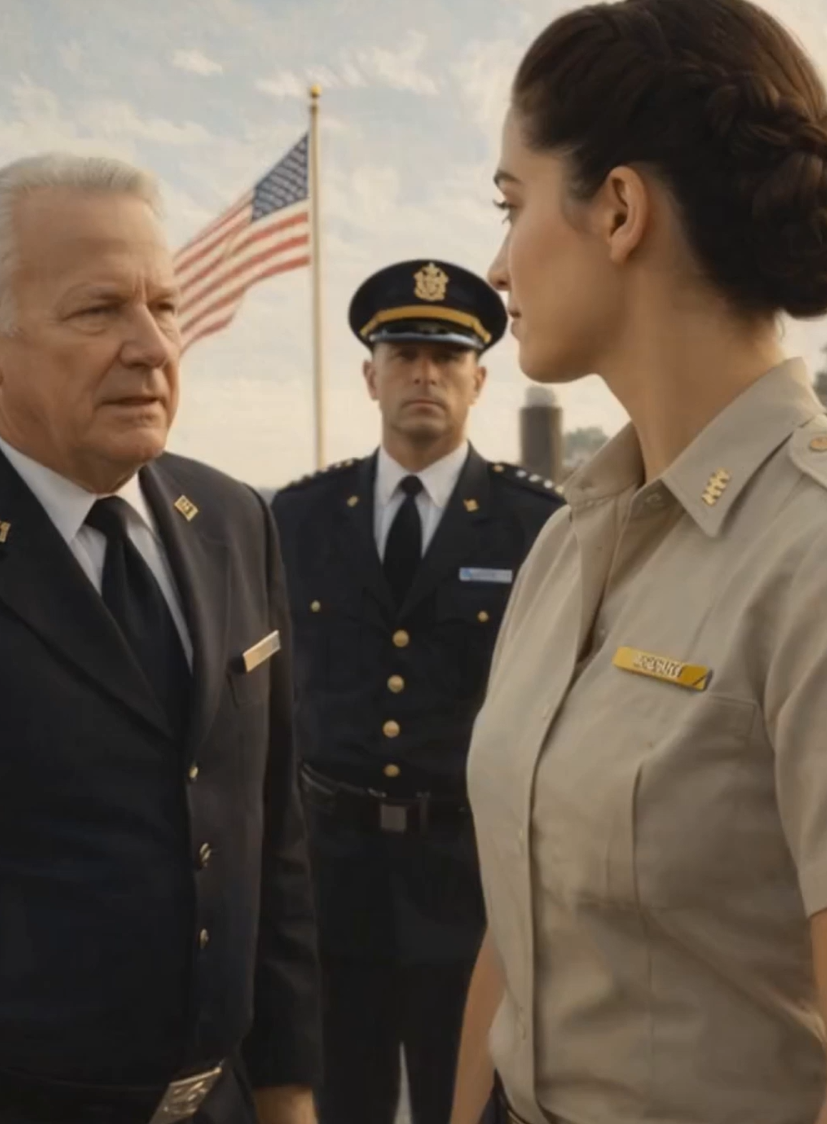
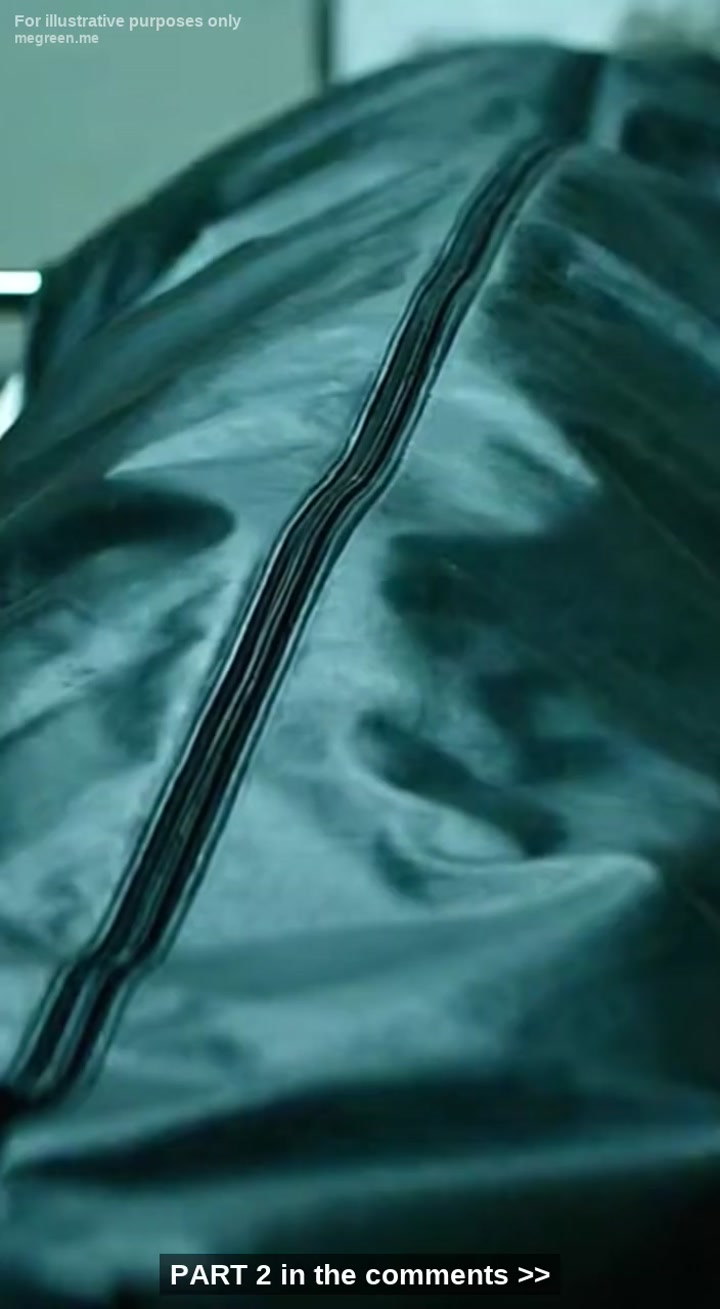
I’ve been a K9 handler for twelve years. My dog, Bolt, is a machine. He doesn’t break protocol. Ever. Until 3:00 AM last Tuesday in the county morgue. We were cutting through the basement, and he lunged at a sealed body bag labeled “DOA.” He wasn’t attacking it. He was trying to save what was inside. When I saw what he was guarding, I prayed it was a hallucination.
Chapter 1
Twenty years carrying a badge, twelve of them with a leash in my hand, and I thought I knew every shade of darkness this city had to offer.
I know the smell of death. It’s specific. It’s not just a scent; it’s a physical weight.
Usually, it’s the sweet, cloying stench of cheap air freshener trying to mask decay in a hoarding house out in the suburbs. Or it’s the metallic, copper tang of blood mixed with engine oil on an interstate crash during a rainy night in Seattle.
But the county morgue at 3:00 AM on a Tuesday? That’s a different kind of death.
It smells like industrial-grade disinfectant, cold stainless steel, and bureaucracy. It smells like finality. It smells like paperwork.
We weren’t even supposed to be there. That’s the part that keeps waking me up in a cold sweat. If I had taken the upper exit like I usually do, none of this would have happened.
Me and Bolt, my ninety-pound Belgian Malinois – a missile wrapped in fur and muscle – were just cutting through the loading bay after a false alarm down at the docks. Some security guard thought he saw a runner, but it was just shadows and rats.
Bolt is cleaner than most rookies I’ve trained. He’s absolute perfection on four legs. He operates on binary code: commands and rewards. He doesn’t do “feelings.” He doesn’t do “hunches.” He works, he bites, he tracks, he gets his toy.
That’s why what happened next froze my blood.
The moment the elevator doors slid open into that basement corridor, Bolt changed.
It wasn’t subtle. It was like a switch flipped.
The hair along his spine stood up like a razorback ridge. I felt a low vibration travel up the heavy leather leash and settle deep into my own bones. A growl.
Not an attack growl. This was something primal. Something ancient.
“Easy, Bolt. Heel,” I said, my voice echoing a little too loud in the tiled silence.
I gave the leash a quick tug, a routine correction that usually snaps him right back to my hip.
He ignored me.
That was the first red flag. Bolt never ignores me. In six years of service, he has never missed a command.
His ears swiveled forward, locked onto something down the long, dimly lit hallway, past the rows of empty aluminum gurneys lined up against the wall.
He started pulling.
Now, a tracking pull is distinct. It’s nose-down, methodical, hunting. This was different. This was frantic. This was panic.
“Bolt! Aus! Heel!” I snapped, putting my weight into the stance, boots squeaking on the polished linoleum.
He hit the end of the six-foot lead with enough force to nearly dislocate my shoulder. He was scrabbling on the floor, claws clicking desperately, trying to get traction.
He wasn’t attacking a suspect. He was trying to get to something.
We were passing Cooler 3 – the overflow intake area. It’s where they stage the bodies when the examiners are backed up or when a mass casualty event hits the highway.
There were three gurneys lined up against the wall.
They were occupied.
All three were covered in those heavy, rubberized black disaster bags. The kind that zip up tight. The kind that mean there is no hope left. They were waiting for the morning shift examiners to clock in at 8:00 AM.
Bolt lunged at the middle one.
He didn’t just sniff it. He slammed his ninety-pound chest into the metal frame of the gurney, knocking it sideways with a screech of metal-on-tile that sounded like a scream in the quiet morgue.
“Officer Russo! What the hell is going on down here?”
Gary, the night-shift attendant, came stumbling out of the breakroom, wiping powdered sugar from his beard onto his scrubs. He looked half-asleep and fully annoyed.
“I don’t know,” I grunted, physically wrestling with my own dog now.
It was embarrassing. I’m a senior handler. I’m supposed to be in control. But Bolt was up on his hind legs, front paws batting frantically at the thick black vinyl of the bag.
He was whining now.
That sound… I’ll never forget it. High-pitched, desperate yips that didn’t belong in this place of silence. It sounded like a puppy crying for its mother.
“Get your animal under control, Mark,” Gary said, nervously adjusting his glasses and stepping back. “Those are John Does from the multi-car pileup on I-5. They’re processed for storage. You can’t have him contaminating a scene. There’s biohazard protocols!”
“Bolt, DOWN!” I roared, grabbing his tactical harness with both hands.
For the first time in his life, my partner turned his head and snapped at me.
He didn’t connect – he wouldn’t – but the warning was clear: Back off, Dad.
He turned back to the bag and started digging. He was trying to bite through the heavy zipper seal near the head of the bag. Saliva was foaming around his black muzzle. His eyes were wide, showing the whites.
My heart was hammering against my ribs.
This wasn’t aggression. It wasn’t a drug hit. I know every twitch of this dog’s body. I know his breathing patterns. I know how he sleeps.
This was terror.
Bolt was terrified of something inside that bag. Or maybe… terrified for something inside that bag.
A cold dread, colder than the air blowing from the coolers, washed over me.
I stopped fighting him.
I dropped the leash.
“Gary,” I said, my voice sounding strangely calm, like I was speaking from underwater. “Who verified these bags?”
“What? The paramedics. County Transit. I don’t know, Mark, I just logged them in twenty minutes ago. The paperwork is on the desk. Why?”
Bolt had managed to get his teeth around the large metal zipper tab. He was yanking backward, his whole body shaking with the effort, his claws digging gouges into the floor wax.
Zzzzzzzzip.
The sound was deafening in the echo chamber of the hallway.
The bag opened about six inches at the top.
Bolt immediately stopped growling. He jammed his snout into the gap. He started… whimpering.
He was licking something inside.
“Mark, seriously, stop him! That’s desecration or something!” Gary yelled, moving to grab the dog.
“Don’t touch him!” I barked, stepping between Gary and the gurney.
I pushed past the attendant. I shoved my own dog aside, ignoring his protests as he tried to nuzzle back in.
My hands were shaking so badly I could barely grip the cold metal tab.
“Bolt, sit,” I whispered.
Miraculously, he sat. But he didn’t take his eyes off the opening. He let out a low, mourning sound that made the hair on my arms stand up.
I pulled the zipper down another foot.
The fluorescent lights flickered above us, casting a sickly green pallor on the contents of the bag.
I was expecting a lot of things. I was expecting a mangled driver from a semi-truck collision. I was expecting an overdose victim. I was expecting the worst gore imaginable.
It wasn’t a John Doe from the I-5 pileup.
It was a small, navy blue puffer jacket.
A tangle of dirty blonde hair.
And beneath it, a face smaller than my hand.
A little boy. Maybe five or six years old.
“Holy…” Gary choked out behind me. The smell of donuts was suddenly replaced by the sharp, acidic stench of fear.
The boy’s skin was gray. Waxy. It blended in with the rubber of the body bag. His lips were blue. His eyes were closed.
“Oh god,” Gary whispered, his voice trembling. “Oh my god, Mark. He came in tagged ‘DOA’. The paperwork said DOA. Mass casualty… they must have… the triage…”
My world narrowed down to that tiny face.
I couldn’t breathe. The weight of the entire system, every failure, every cracked corner of this city, seemed to crush down on that gurney.
Paramedics miss things. It happens. In a pileup with twenty cars, fires, screaming, smoke… things happen. They check for a pulse, they don’t feel one, they move to the next victim who can be saved. Triage is a brutal math equation.
But this… this was a child.
I reached out, my glove hovering over the boy’s neck. I didn’t want to touch him. I didn’t want to confirm the coldness.
Then, Bolt nudged the boy’s cheek with his wet nose again. A soft whine.
And I saw it.
A twitch.
Just a feather-light flutter of an eyelid.
The chest beneath the puffer jacket gave a shallow, hitching jerk. A tiny, almost invisible gasp for air.
He wasn’t dead.
Not yet.
“Gary!” I screamed, the sound tearing out of my throat like a gunshot. “CODE 3! GET THE MEDICS! NOW!”
“He… he moved?” Gary stood paralyzed, staring at the bag.
“MOVE!” I roared, grabbing my radio. “Dispatch, this is K9-7! I have a critical medical emergency at the County Morgue! I have a living pediatric patient in the intake bay! Send everything you have! NOW!”
I ripped the bag open the rest of the way.
The boy looked perfect. Too perfect. There was no blood. No visible trauma. just that terrible, silent stillness.
I ripped my gloves off and pressed two fingers to his carotid artery.
Nothing.
Wait.
There.
A thread. A faint, thready flutter. It was so weak it felt like a ghost.
“Come on, buddy. Come on,” I whispered, leaning over him.
Bolt was right there, his head resting on the gurney, watching me. He knew. Somehow, he knew the boy was still in there.
I started to check his airway, tilting his head back gently.
And that’s when I saw the marks on his neck.
They weren’t from a car crash. They weren’t seatbelt burns.
They were handprints.
Bruises. Purple and distinct against the pale skin. Four fingers on one side, a thumb on the other.
I froze.
This kid hadn’t died in a car crash.
I looked at the tag on the bag again. Unknown Male. Scene of MVA on I-5.
“Gary,” I said, my voice turning to ice. “Who brought this bag in? Specifically.”
Gary was on the wall phone, pale as a sheet. “Uh… it was… it was a private transport. Not the usual FD ambulance. Overload contract.”
I looked back at the boy. The bruises were fresh.
Someone had tried to strangle this child.
And then, amid the chaos of the crash, they had slipped him into a body bag and sent him here to disappear forever.
The boy’s eyes flew open.
They were blown wide, pupils dilated to black saucers. He didn’t see me. He didn’t see the morgue. He was seeing something else.
He let out a sound – not a cry, but a rasping, dry rattle.
“Hi… de…”
“What?” I leaned closer, my ear inches from his blue lips. “What did you say, buddy?”
He gripped my forearm with surprising strength for a dying child. His fingernails dug into my skin.
“He’s… here,” the boy wheezed. “ The… Bad… Man.”
I looked up.
The elevator dinged.
The doors at the end of the hallway, the ones we had just come through, were sliding open.
The hallway was empty, except for a pair of heavy work boots stepping out.
Bolt spun around.
He didn’t whine this time. He didn’t bark.
He went completely silent. He lowered his head, baring every tooth in his head, and his muscles coiled like steel springs.
The man at the end of the hall wore a paramedic uniform, but it was sloppy. Untucked. And he was holding a syringe.
He looked at me. He looked at the boy. He looked at the open bag.
He smiled.
“Officer,” the man said, his voice smooth and calm. “I believe you found something of mine.”
My blood ran cold, then hot. This wasn’t some desperate parent. This was calculated evil.
Bolt launched himself forward, a furry brown missile, before I could even issue a command. His silence was more terrifying than any bark.
The paramedic, a man with cold eyes and a name tag that read ‘Marcus Thorne,’ didn’t flinch. He just raised the syringe.
“Bolt, NO!” I screamed, but it was too late. My priority shifted.
I had to protect that boy.
Marcus, however, was quicker than I gave him credit for. He sidestepped Bolt’s initial lunge with an almost practiced ease.
He wasn’t trying to escape; he was trying to get to the gurney.
“Gary, get out of here! Call for backup again! Tell them an officer is under attack!” I yelled, pulling my sidearm.
Gary, still frozen by the phone, finally snapped to action. He dropped the receiver with a clatter and bolted for the stairs at the far end of the hallway.
Bolt recovered and circled back, a low growl finally rumbling in his chest. Marcus now had a clear path to the boy.
I didn’t hesitate. I aimed my pistol. “Freeze! Drop the syringe, now!”
Marcus just laughed, a low, guttural sound that seemed out of place in his calm demeanor. “You won’t shoot me, Officer. Not with the boy right there. What if you miss?”
He was right. I couldn’t risk it. The boy, Owen, was still gasping weakly, barely clinging to life.
Marcus lunged, not at me, but towards the gurney. Bolt was faster.
He intercepted Marcus with a powerful shoulder block, sending the paramedic stumbling back against the tiled wall. The syringe clattered to the floor, rolling away.
Bolt didn’t bite. He just held Marcus pinned, snarling inches from his face, a silent, terrifying warning.
This gave me the opening I needed. I holstered my weapon and moved in.
“On the ground, now! Hands behind your head!” I commanded, pulling out my cuffs.
Marcus didn’t resist Bolt. He slowly lowered himself, hands already moving to the back of his head. He was unnervingly compliant.
Bolt eased off, but stood guard, his eyes never leaving Marcus. His primal instinct had taken over, and it was absolute.
Just as I clicked the cuffs into place, the elevator dinged again. This time, it was the sound of salvation.
Two uniformed officers and a pair of paramedics rushed out, lights flashing, sirens wailing faintly from outside the building. Gary must have made it.
“Officer Russo, what’s going on?” one of the officers asked, weapon drawn, seeing the cuffed paramedic and the open body bag.
“I have an active homicide attempt, possibly two, and a living patient here,” I said, gesturing to Owen. “This man tried to silence a witness. Get the boy stable, now!”
The paramedics immediately swarmed the gurney, their trained hands moving quickly, attaching monitors, starting an IV. Owen’s tiny chest was barely moving.
One of the officers secured Marcus. He still wore that unsettling smirk.
“He’s not just a paramedic,” I told the officers. “He knew this boy was alive. He tried to finish the job.”
The lead paramedic, a woman named Clara, looked at me, her face grim. “Officer, the boy’s vitals are almost non-existent. He’s hypothermic. And there are clear ligature marks on his neck.”
“I know,” I said, my voice heavy. “He told me the ‘Bad Man’ was here. He saw something.”
The next few hours were a blur of flashing lights, medical personnel, and detectives. Owen was rushed to the pediatric ICU. The other two body bags were checked, confirming they were indeed deceased victims from the I-5 crash.
Marcus Thorne was taken into custody. His paramedic credentials were real, which made the whole thing even more chilling.
Detectives Markovich and Chen took over the investigation. They found that Marcus Thorne was part of an ‘overflow’ team, contracted to assist during major incidents. This gave him direct access to the crash site.
Owen’s official identification was difficult. The boy had no ID on him, no wallet, nothing. His clothes were generic.
The bruises on his neck indicated attempted strangulation. The paramedics at the crash site had logged him as ‘DOA – probable blunt force trauma from MVA’. A convenient misdiagnosis.
Bolt, exhausted but vigilant, stayed by my side through the initial questioning. He was a hero, a living testament to an instinct beyond human understanding.
As the sun began to rise, painting the sky in hues of orange and grey, I stood outside the morgue, sipping a terrible cup of coffee. Detective Markovich joined me.
“We found something interesting, Officer Russo,” he said, his voice low. “Marcus Thorne’s apartment was a mess. But we found a small, hidden compartment under his floorboards.”
“What was in it?” I asked, bracing myself.
“Just pictures, mostly. Dozens of them. All of different children.” Markovich paused, his gaze distant. “And a detailed logbook. Dates, times, locations.”
My stomach dropped. This wasn’t just about Owen. This was something far, far worse.
“He wasn’t just killing them,” Markovich continued, his voice tight. “He was tracking them. He was a professional kidnapper. The crash was just a chaotic smokescreen.”
Owen, it turned out, was the son of a prominent tech CEO, a man named Mr. Caldwell. His family had reported him missing a week ago, along with his nanny, a young woman named Sarah.
The MVA on I-5 wasn’t just an accident; it was a carefully orchestrated distraction. Marcus, using his paramedic access, had planned to snatch Owen and Sarah during the chaos.
But something went wrong. Sarah must have fought back. Her body was later found in a different, abandoned vehicle near the crash site, also showing signs of struggle.
Owen had witnessed Sarah’s murder and his own abduction. Marcus, knowing the boy had seen his face, tried to silence him during the pandemonium of the crash.
He strangled Owen, then, confident the boy was dead, tucked him into a body bag from the scene, knowing it would be sent to the morgue and buried without an identity.
The logbook revealed Marcus Thorne’s chilling modus operandi. He targeted children from wealthy families, not for ransom, but to sell them to a clandestine network. He meticulously tracked their routines, their nannies, their vulnerabilities.
The details of the network he belonged to slowly unraveled over the next few weeks, thanks to the logbook and a dedicated task force. It was far-reaching, with connections to several other unsolved disappearances across the country.
Owen slowly recovered. He was still traumatized, but alive. He clung to Bolt, his tiny hand buried in the dog’s fur, finding comfort in the animal that had saved him.
The first time Owen spoke clearly again, he asked for Bolt. My partner, the machine, just licked the boy’s face, a soft, warm gesture.
Mr. Caldwell, Owen’s father, was a quiet, reserved man. He visited me at the station with Owen and Bolt a month later.
“Officer Russo,” he said, his voice thick with emotion. “There’s no way to thank you. Or Bolt. You gave me back my son.”
He held out an envelope. “This is a reward. For your K9 unit. For everything.”
I opened it. Inside wasn’t money. It was a file.
A picture slid out. It was Marcus Thorne. But younger. And in the background, a man, smiling, with an arm around Thorne’s shoulder.
It was Mr. Caldwell.
My mind reeled. “What is this, Mr. Caldwell?” I asked, my voice barely a whisper.
Mr. Caldwell sighed, a heavy, tired sound. “Marcus Thorne… he’s my brother. My younger half-brother, from my father’s second marriage. We haven’t spoken in years.”
He explained that Marcus had always been the black sheep, involved in petty crimes. Mr. Caldwell had cut ties years ago after a failed attempt to help him get his life straight.
“He resented me. Resented my success,” Mr. Caldwell continued, his eyes full of pain. “He threatened me once, years ago. Said he’d take what I loved most.”
The karmic twist was chilling. Marcus had targeted his own nephew, not just for the network, but as a twisted act of vengeance against his brother, Owen’s father. He was going to use the boy, then dispose of him, inflicting maximum pain.
The “private transport” that Gary mentioned earlier? That was a company owned by Mr. Caldwell, which Marcus had manipulated to get on the emergency contract roster after the I-5 pileup. He used his brother’s own business to facilitate his monstrous plan.
The discovery sent shockwaves through the investigation. It painted Marcus as not just a kidnapper, but a man driven by deep-seated familial hatred.
Mr. Caldwell, in his grief and gratitude, became a fierce advocate for child safety. He used his vast resources to fund a national initiative, ‘Owen’s Guardians,’ dedicated to preventing child abductions and supporting law enforcement K9 units.
He established a multi-million dollar foundation, ensuring that every police force, no matter how small, could afford to train and equip K9 partners like Bolt. Bolt himself became the unofficial mascot.
This selfless act, born from unimaginable pain, brought a measure of healing to the Caldwell family and countless others. Marcus Thorne was ultimately sentenced to multiple life sentences, his network dismantled.
Bolt continued his service, but something in him had changed. He wasn’t just a machine anymore. He’d always been my partner, but now, I saw the depth of his compassion, his unwavering loyalty, not just to me, but to the innocent.
He taught me that sometimes, the greatest acts of heroism aren’t about following every rule, but about breaking protocol when your heart, or in his case, his instincts, tell you something is profoundly wrong. It’s about listening to that quiet voice, or that desperate whine, that tells you life is precious, and worth fighting for, even in the darkest of places.
Life has a funny way of delivering justice, sometimes through the most unexpected channels, like a dog’s intuition or a brother’s broken heart. It reminds us that every life has value, and every act of kindness, however small, can echo into eternity.
If this story touched your heart, please share it and give it a like. Let’s spread the word about the quiet heroes, both human and K9, who protect the most vulnerable among us.